BLOGS
Smart HVAC Controls for Catoosa Businesses: Top Systems Compared
For Catoosa businesses, maintaining a comfortable indoor environment can directly affect employee productivity, customer experience, and operating costs.
Smart HVAC controls give businesses greater control over heating and cooling while making it easier to adjust temperatures based on occupancy, schedules, and changing conditions.
If you are considering Smart HVAC Controls Catoosa, OK, understanding the different control options can help you choose a system that matches your building, HVAC equipment, and business needs.
What Are Smart HVAC Controls?
Smart HVAC control systems are devices that can be integrated to help companies regulate their heating and cooling processes efficiently. Smart HVAC controls allow businesses to adjust temperatures automatically based on scheduled times and perform diagnostics on HVAC equipment. These smart hvac controls for businesses can help improve energy efficiency, maintain indoor comfort, and optimize HVAC system performance.
Whereas a traditional thermostat regulates temperature in only one place. Some smart HVAC control devices can also interface with other building systems.
For businesses, the goal is simple: maintain dependable comfort while avoiding unnecessary HVAC operation.
Why Should Catoosa Businesses Use Smart HVAC Controls?
Commercial buildings often have changing occupancy levels throughout the day. A business may be full during operating hours but nearly empty overnight. Running HVAC equipment at the same settings around the clock can result in unnecessary energy use.
Smart controls can help businesses:
- Create heating and cooling schedules
- Adjust temperatures according to occupancy
- Monitor HVAC operation remotely
- Reduce unnecessary system runtime
- Improve temperature consistency
- Identify unusual system behavior sooner
These advantages can complement regular HVAC maintenance to help heating and cooling equipment operate efficiently and reliably.
Top Smart HVAC Control Systems Compared
Not every business needs the same level of HVAC automation, whether the property requires basic controls or more advanced hvac for gyms applications. The best choice depends on building size, equipment, occupancy patterns, and the amount of control required, including the specific needs of glenpool hvac systems.
1. Smart Wi-Fi Thermostats
A
wi-fi thermostat
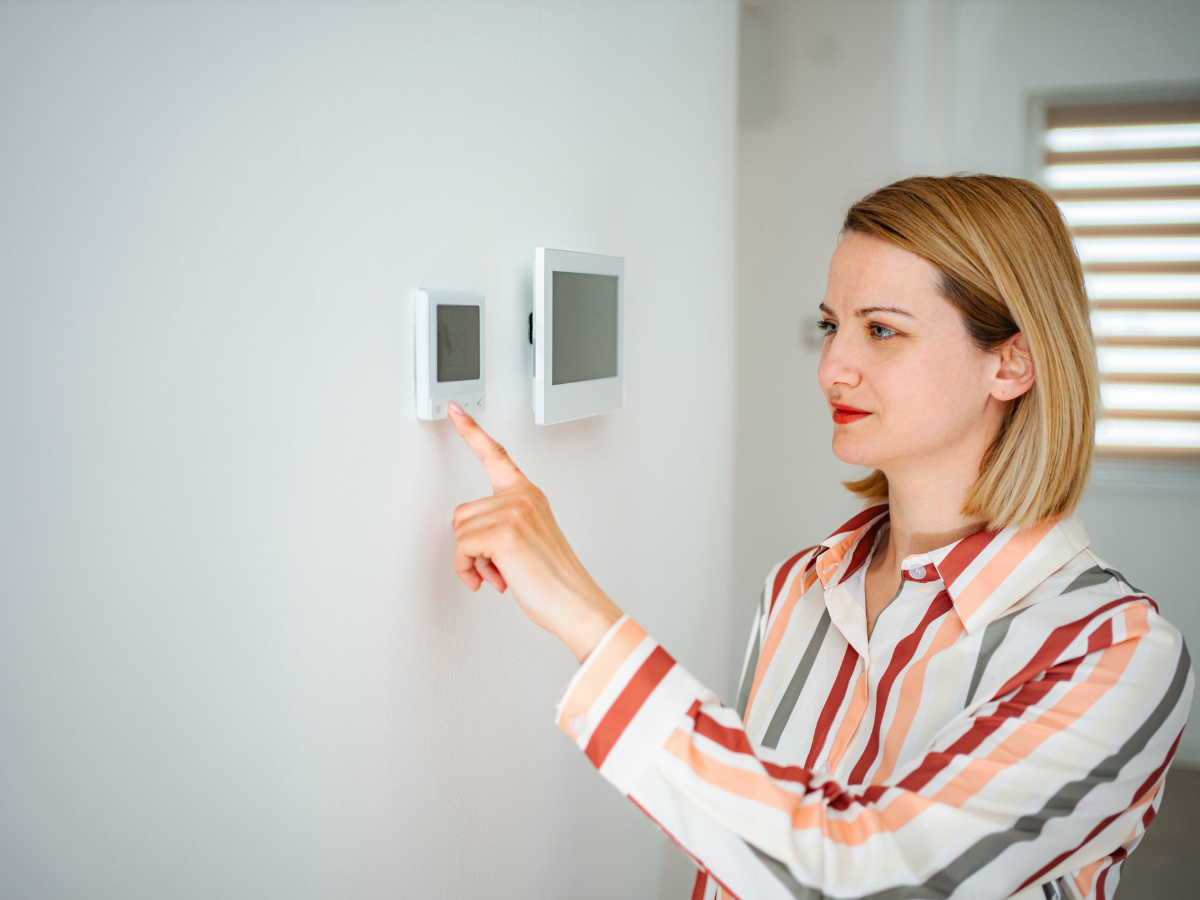
can be a practical choice for small-scale business premises or organizations with simple HVAC systems
They have commendable features such as remote temperature control, scheduling, and mobile phone access. Employees or property managers may be able to make changes without physically visiting the thermostat.
Best for: Small offices, retail spaces, professional offices, and other businesses with basic HVAC requirements.
Advantage: Affordable and relatively simple control.
Limitation: They may not provide the advanced automation required for larger commercial buildings.
2. Programmable Commercial Thermostats
Programmable controls allow businesses to establish heating and cooling schedules around operating hours.
For example, a business can maintain comfortable temperatures during working hours and use different settings when the building is closed. This can prevent the HVAC system from operating unnecessarily when the property is unoccupied.
Best for: Businesses with predictable daily schedules.
Advantage: Automated temperature scheduling.
Limitation: They offer less flexibility and remote functionality than many connected smart systems.
3. Zoned HVAC Controls
Zoning divides a building into separate temperature-control areas. Each zone can have its own thermostat or control strategy, allowing businesses to manage areas according to their individual needs.
This can be particularly useful when different sections of a building have different occupancy levels or heating and cooling requirements.
Best for: Larger offices, multi-room businesses, and buildings with varying comfort needs.
Advantage: More precise temperature management.
Limitation: Installation may be more complex depending on the existing HVAC system and ductwork.
4. Building Automation Systems
Building automation systems provide a more comprehensive approach to commercial HVAC management. Instead of controlling one thermostat, these systems can coordinate multiple HVAC components and building zones.
Advanced systems may provide centralized monitoring, scheduling, automation, hvac energy monitoring, and performance information.
Best for: Larger commercial properties and buildings with complex HVAC requirements.
Advantage: Centralized control and advanced automation.
Limitation: Higher installation complexity and investment compared with basic smart thermostats.
How Do You Choose the Right Smart HVAC Controls?
Before investing in smart HVAC controls, consider how your business actually uses its building.
Ask questions such as:
- How large is the property?
- How many HVAC zones need independent control?
- Does occupancy change throughout the day?
- Do you need remote access?
- Is your current HVAC equipment compatible?
- Do you need centralized control for multiple areas?
A professional HVAC assessment can help determine whether a simple smart thermostat, zoning solution, or more advanced control system makes sense.
Can Smart HVAC Controls Reduce Energy Waste?
They can help reduce unnecessary HVAC operation by allowing businesses to schedule temperature settings, adjust controls remotely, and manage different areas according to actual needs.
However, smart controls cannot compensate for an improperly sized, poorly maintained, or malfunctioning HVAC system. Equipment condition, airflow, ductwork, and regular maintenance remain important to overall system performance.
Air Masters Inc. provides HVAC repair, installation, ductwork, and routine maintenance services for homes and businesses in the Catoosa area.
Get Professional Help With Smart HVAC Controls in Catoosa
If you are evaluating Smart HVAC Controls Catoosa OK, Air Masters Inc. can help you assess your heating and cooling needs and determine an appropriate solution. With experience in HVAC installation, repairs, maintenance, and new construction, the company provides heating and cooling solutions throughout the Tulsa-area communities it serves.
Contact Air Masters Inc. today to discuss your commercial HVAC control needs and request a free quote.
Frequently Asked Questions
Are smart HVAC controls worth it for a small business?
Smart HVAC controls are helpful for small businesses with benefits such as scheduling, remote access, or better temperature management. The right system depends on the building and existing HVAC equipment.
Can smart controls work with an existing HVAC system?
Many smart controls can work with existing systems, but compatibility varies. A professional should evaluate the equipment before installation.
What is the best HVAC control system for a large commercial building?
Larger buildings may benefit from zoning or building automation systems because they provide greater control across multiple areas. The appropriate option depends on the HVAC design and building requirements.
Can smart HVAC controls be controlled remotely?
Many connected HVAC systems offer remote access through a smartphone, tablet, or computer.