BLOGS
HVAC for Gyms and Fitness Centers in Tulsa: Managing Heat and Odor
Walk into a fitness center on a busy weekday evening, and you will feel it immediately. Dozens of bodies working hard, machines running nonstop, and doors opening and closing as members come and go. Getting HVAC installation in gym facilities right is not the same as cooling a typical office or retail space because the hvac demands in fitness centers require effective temperature control, proper ventilation, and consistent air circulation.
Heat and lingering odors are two of the biggest complaints gym owners hear from members, and both can trace back to the same root cause. The HVAC system either was not designed for the demands of a fitness environment or has not been sized correctly for the space.
Why Gyms Push HVAC Systems Harder Than Most Buildings
A typical office might have a handful of people generating body heat throughout the day. A busy gym floor can have dozens of people exercising at once, and every one of them is producing far more heat than someone sitting at a desk.
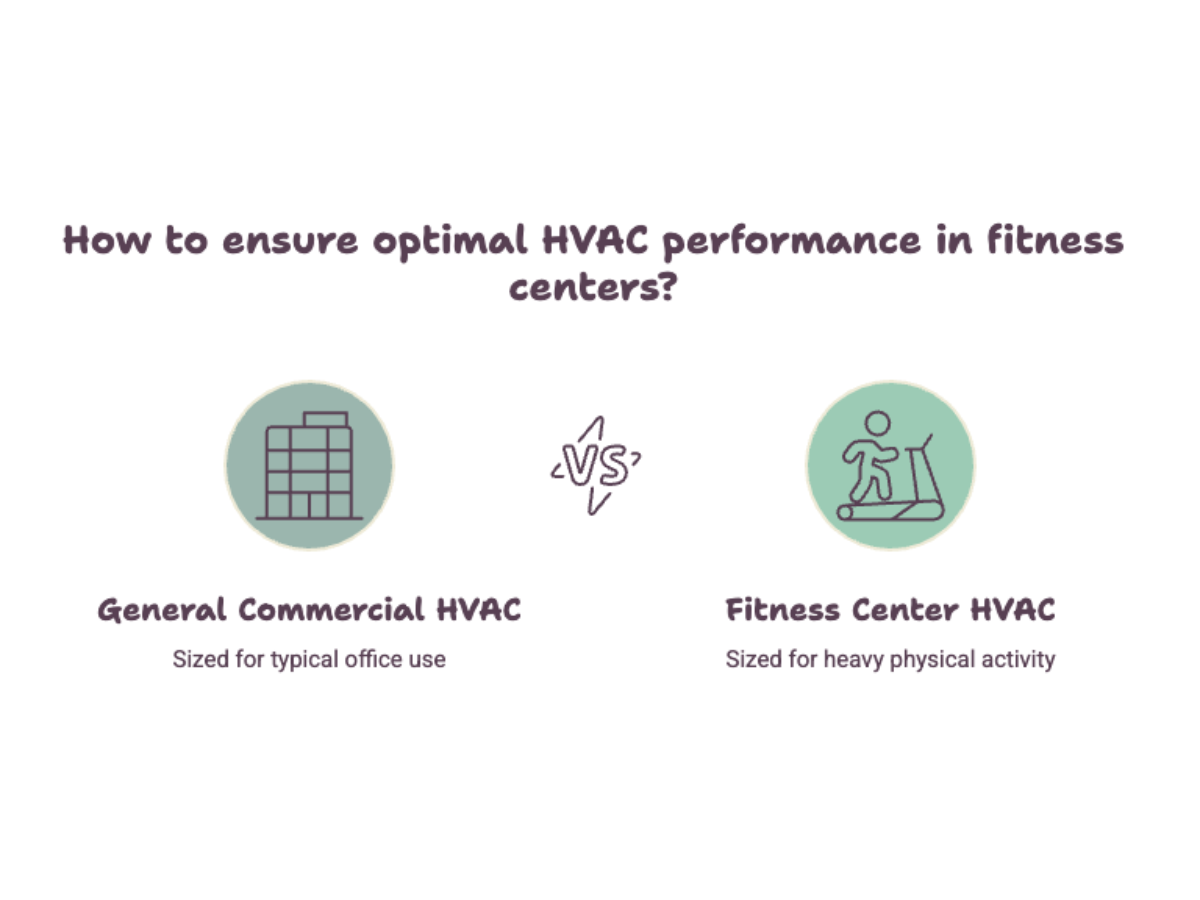
Add in cardio equipment, free weights, and group class areas, and the total heat load in a fitness center climbs quickly. Members searching for why their gym is so hot or reporting hvac noise complaints may be dealing with a system that was sized or configured for general commercial use rather than heavy physical activity.
Humidity adds another layer to the problem. Heavy breathing and sweat raise moisture levels throughout the day, which makes the air feel warmer than the thermostat suggests and creates the perfect environment for lingering odor.
Managing Heat Across Different Zones
Not every single part of a gym generates the same heat load. A weight room packed with equipment and members lifting heavy will run warmer than a stretching area or a front lobby.
This is exactly why HVAC installation in gym spaces benefits from a zoned approach rather than a single system trying to cool the entire building evenly. Zoning allows different areas to be adjusted independently based on actual usage and activity level.
Cardio zones with rows of treadmills and bikes often need dedicated airflow directed right at the equipment, since that is where heat concentrates most during peak hours. Group class rooms need flexible controls too, since a spin class generates far more heat than a yoga session in the same space.
- High-intensity workout areas with dedicated airflow
- Cardio zones needing direct ventilation
- Group classrooms with flexible temperature control
- Locker rooms and showers with separate humidity management
- Lobby and reception areas kept at a standard comfort level
Tackling Odor at the Source
Odor control comes down to two things: moisture and airflow. A system that only cools the air without properly managing humidity and exhaust will struggle to keep a gym smelling fresh, no matter how often the floors get cleaned.
Proper ventilation pulls stale, humid air out of the building while bringing in fresh outside air to replace it. This exchange matters more in a gym than almost any other commercial space because sweat and body odor build up fast in a closed environment.
Locker rooms and shower areas need their own dedicated exhaust separate from the main workout floor. Without it, moisture and odor from those spaces can migrate into the rest of the building through shared ductwork.
Filtration plays a role too. Higher quality filters capture more airborne particles and help maintain better indoor air quality throughout a space with constant heavy use.
What to Consider Before Installation
A successful HVAC installation in gym buildings starts with an accurate load calculation that accounts for occupancy, equipment heat output, and square footage, not just the size of the building alone.
We also look closely at existing ductwork and ventilation paths, since older commercial buildings converted into fitness spaces often need upgrades to handle the airflow demands of a gym properly.
Rooftop units, multi-zone systems, and packaged units are all worth considering depending on facility layout and size. Getting HVAC installation in gym buildings right the first time means working with a team that understands commercial mechanical systems, not just residential ones.
Building a System That Keeps Up With Your Members
A comfortable, well-ventilated gym keeps members coming back, and an uncomfortable one drives them to look elsewhere. Getting the heat and odor challenges right from the start makes a real difference in member retention and daily satisfaction.
Air Masters Inc. has provided commercial HVAC service across the Tulsa area since 1997, working with fitness centers, retail spaces, and other high-demand commercial buildings. If your facility is fighting heat, humidity, or odor issues, reach out and let our team design a system built for how your gym actually operates.
Frequently Asked Questions
Why does my gym feel hot even with the AC running?
This usually points to an undersized system or one not designed for high occupancy and heavy equipment heat loads.
Can zoning really make a difference in a fitness center?
Yes. Zoning lets you cool high activity areas more aggressively while keeping lobbies and offices at standard comfort levels.
How do I stop locker room odor from spreading?
Dedicated exhaust ventilation for locker rooms and showers keeps humidity and odor from traveling into the main gym area.
Do gyms need different filtration than offices?
Generally yes. Higher-use spaces benefit from higher-rated filters that handle more airborne particles and moisture.
How often should gym HVAC systems be serviced?
Given heavy daily use, more frequent maintenance checks help catch wear before it turns into a bigger problem.