BLOGS
Hosting for the Holidays? Keep Your Home Warm Without Overworking the Furnace

The best thermostat setting for winter is about 68 degrees while you are home and awake, according to the U.S. Department of Energy. Holiday guests change the math, though. A full house warms itself, so the furnace can often coast. Here is how to keep everyone comfortable without running the system harder than it needs to run.
What Temperature Should the Thermostat Be When Guests Arrive?
Set it to 68 degrees, or up to 70 if the house still feels cool. Guests add body heat and a busy oven adds more, so a higher setting usually just burns extra fuel.
Raising the setting does not make a furnace heat faster. It only changes when the system shuts off. Set the temperature before the doorbell rings, and offer a sweater instead of a higher number. Most people stay comfortable at 68 once they have a drink in hand and a seat at the table.
Is It Worth Turning the Heat Down at Night?
Yes. The Department of Energy says turning the thermostat back 7 to 10 degrees for eight hours a day can save as much as 10 percent a year on heating.
The Department also says a furnace doesn't work harder to recover afterward because a cooler house loses heat more slowly. During a visit, drop the setting a few degrees once everyone is in bed, then schedule it to rise before the first cup of coffee. Do not go below 55 degrees, since cold pipes become a real risk. Guest rooms deserve a gentler setback than an empty house does.
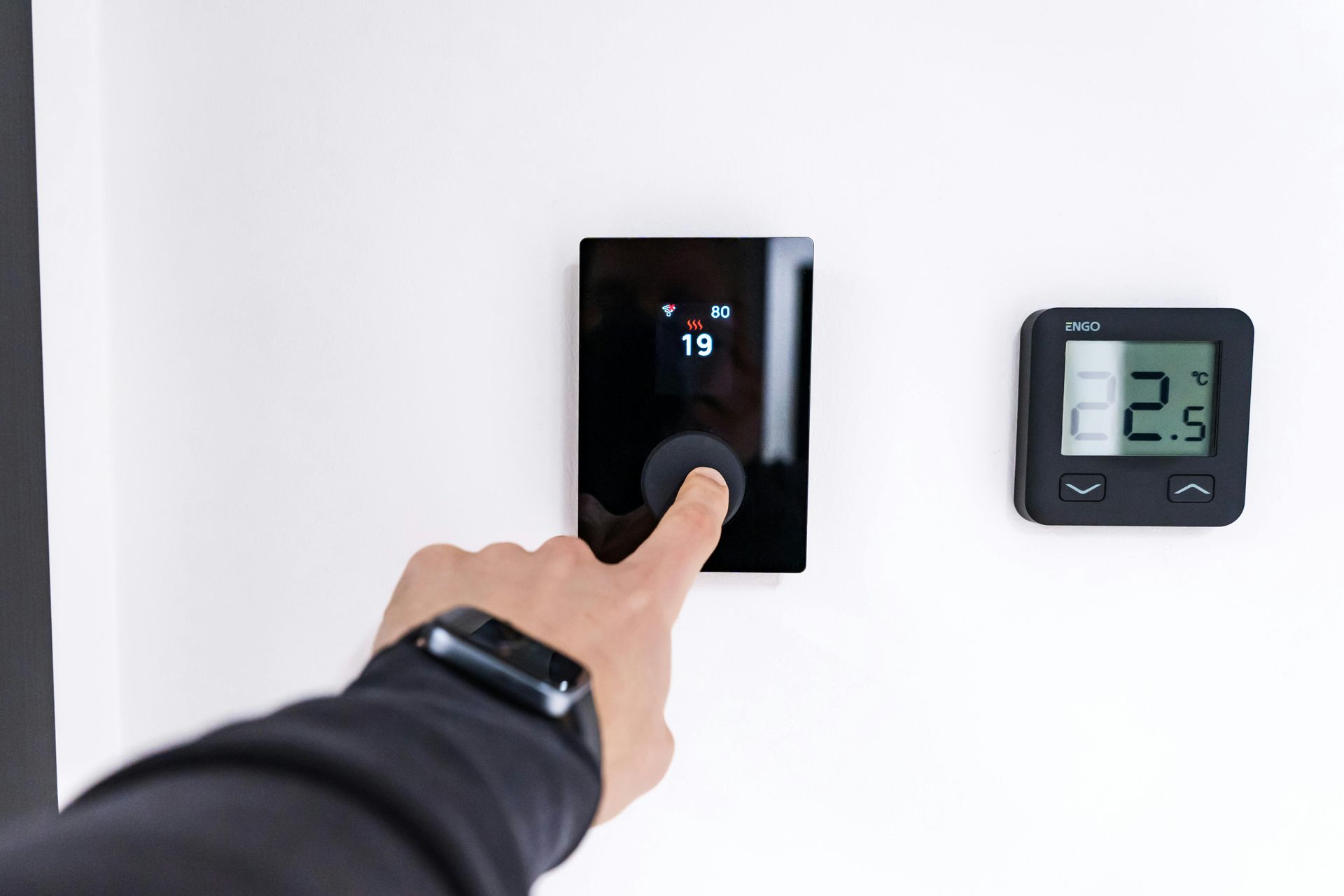
A programmable or smart thermostat takes the guesswork out of this. It lowers the temperature at bedtime and raises it before breakfast, so nobody has to tiptoe down the hall at midnight to adjust the dial. If your current thermostat is older and hard to program, ask a technician whether an upgrade makes sense for your system. Compatibility varies by furnace and wiring, so check before you buy.
What Should the Thermostat Schedule Look Like?
Make the changes early, hold steady during the party, and set back late. Constant adjusting is how a furnace ends up cycling more than it should.
- Two days before, replace the filter, clear the vents, and confirm the thermostat responds.
- On the morning of the gathering, set 68 and leave it alone.
- If the kitchen and the crowd push the room warm, nudge the setting down a degree or two instead of opening windows.
- When the last guest leaves, set the thermostat back for the night.
- Program a warm-up for the morning so no one wakes up to a cold floor.
How Can You Keep Rooms Warm Without Raising the Setting?
Small airflow and placement fixes often matter more than the display number.
- Swap the filter first. A clogged filter restricts airflow. This HVAC filter replacement schedule for Tulsa’s dusty climate explains how often to change it.
- Keep vents and returns clear. Gift boxes and extra chairs block warm air.
- Check the thermostat location. It belongs on an interior wall, away from sunlight, drafts, doorways, and windows. Kitchen heat can make it read warm and shut the furnace off early.
- Stop drafts. Door sweeps or a rolled towel at exterior doors help.
- Use the sun. Open curtains on sunny windows by day and close them at night.
When Is the Furnace the Real Problem?
If rooms stay cold at 68 degrees, the setting is not the issue. Common warning signs include a system that will not shut off, cool air from the vents, uneven heating, a burning smell, or energy bills that keep climbing.
Any of these deserves a look from a qualified technician. Air Masters Inc. handles heater repair and installation as well as broader HVAC repairs. Routine HVAC maintenance includes examining heating elements, assessing thermostat settings, and replacing air filters, which is worth doing before a houseful of guests tests the system.
Conclusion
The best thermostat setting for winter is the lowest one that keeps your household comfortable, usually near 68 degrees. Use setbacks overnight and fix airflow before touching the dial. If the house still feels cold, the system needs attention, not a higher number. To plan heating care before the holidays,
contact Air Masters Inc. and ask about your furnace.
Frequently Asked Questions
What is the best thermostat setting for winter during a party?
Set it to 68 degrees, or 70 if the house feels cool. Crowds and cooking add heat, so you rarely need a higher setting.
Is it cheaper to leave the heat on all day or turn it down?
Turning it down is generally cheaper. The Department of Energy says setting it back 7 to 10 degrees for eight hours a day can save up to 10 percent a year.
How low can I set the thermostat in winter?
Many utility guides advise staying above 55 degrees because colder indoor temperatures raise the risk of frozen pipes. Overnight settings around 60 to 64 degrees are common.
Why does my house feel cold when the thermostat says 68?
Common causes include dirty filters, blocked vents, drafts, or a poorly placed thermostat. If the problem continues, have a professional inspect the furnace.
Should I schedule a furnace checkup before the holidays?
Yes, especially if the system has not been serviced this year. Annual maintenance helps catch small problems before cold weather and heavy use expose them.
Does a programmable thermostat really save energy?
It can, because it automates setbacks you might otherwise forget. The savings depend on your schedule, your home, and how consistently you use the program.
Where should the thermostat be placed?
Place it on an interior wall, away from direct sunlight, drafts, doorways, and windows. A poor location can make the system shut off too early or run too long.