BLOGS
Thermostat or Furnace? How to Tell Which One Is the Problem
A thermostat not turning on heat can mean one of two very different problems: a control that is not sending the call for heat, or a furnace that is not answering it. Telling them apart takes a few minutes and no tools. Use the checks below to find out which side is failing, and learn where a safe do-it-yourself check ends and a professional repair begins.
How Can You Tell If the Thermostat or the Furnace Is Failing?
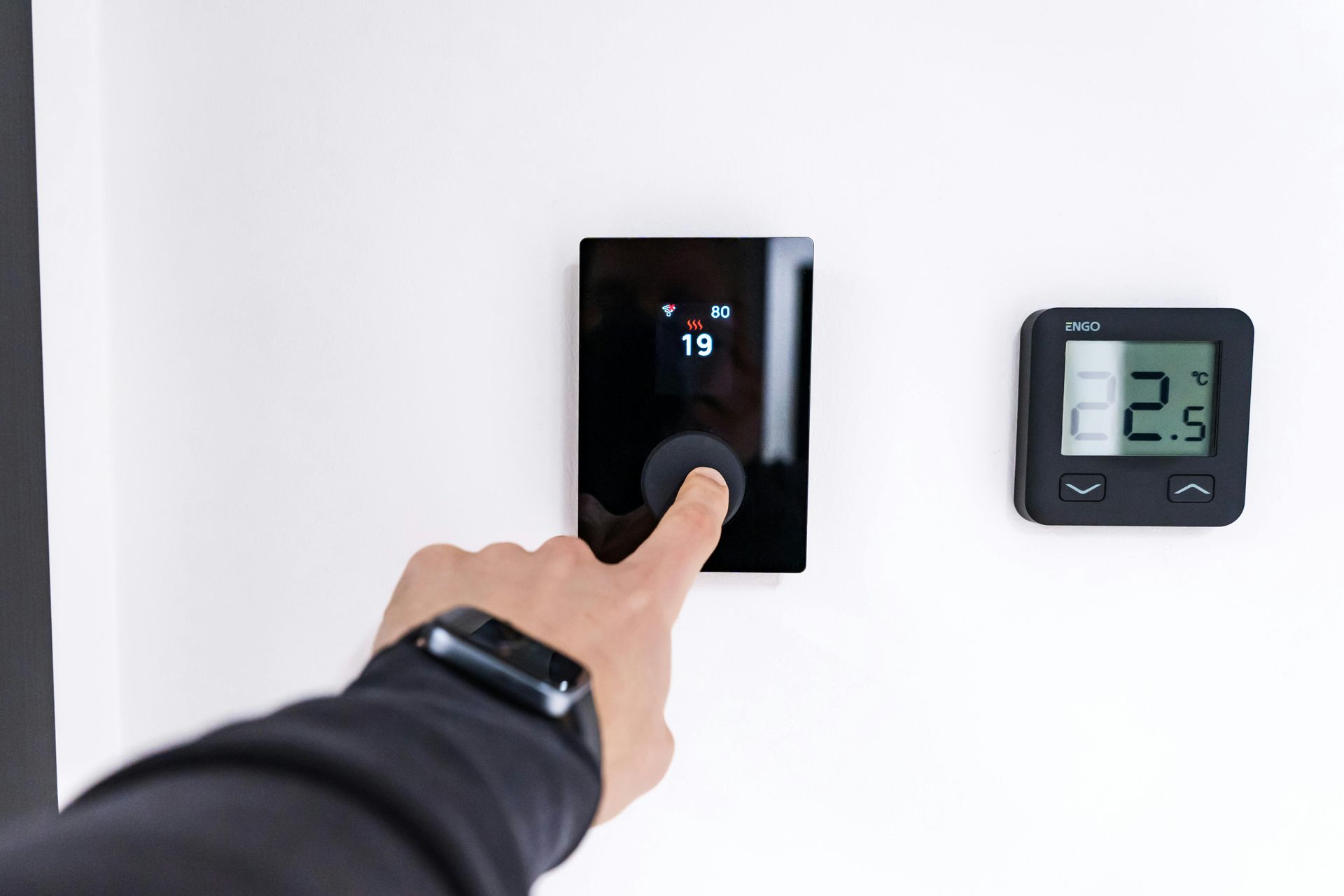
If the thermostat screen is blank or unresponsive, suspect the thermostat. If the screen works and says heat is on, but the house stays cold, suspect the furnace.
What Should You Check on the Thermostat First?
Start with the settings and the power. Most cases of a thermostat not turning on heat trace back to a simple cause.
- Confirm the mode is set to heat and the target temperature is higher than the room temperature.
- Replace the batteries if the thermostat uses them. Weak batteries can make a thermostat behave strangely, and many manufacturers suggest changing them once a year.
- Check for a hold or schedule setting that overrides your change.
- Look for loose or damaged wires behind the cover, but do not touch them.
If the thermostat was recently replaced, the installer may have wired or set it up incorrectly. Compatibility also matters, especially with heat pump systems.

What Should You Check on the Furnace?
Confirm the furnace has power, airflow, and fuel. These are quick checks that don't require opening anything.
- Make sure the furnace power switch is on.
- Check the circuit breaker.
- Look at the filter. A badly clogged one restricts airflow and can shut the system down.
- Confirm gas is supplied to the home.
If the furnace still will not run, the cause may be a failed blower motor, a dirty or worn igniter, or a control problem. These issues require a technician, and a furnace that cannot light is covered under heater repair.
Why Does the Thermostat Say Heat Is On While the House Stays Cold?
The thermostat only sends a request. The furnace has to start, light, and move air for the house to warm up, and a break anywhere in that chain looks the same from the living room.
Common breaks include a furnace safety shutoff, a failed igniter, a blower that will not start, or a loose connection between the thermostat and the furnace. Wiring sits in the middle and can fail on either end, so a technician can test the signal at the furnace to quickly settle the question.
Will Replacing the Thermostat Fix the Problem?
Only if the thermostat is the part that failed; a thermostat not turning on heat is not always the thermostat’s fault. A new unit will not help a furnace that has no power, a clogged filter, or a worn igniter.
Replacement does make sense when the thermostat is old, the display is dead after new batteries, or the settings will not hold. Match the new thermostat to your system, since a heat pump needs a compatible control. If you are unsure about the wiring, have a professional handle it.
When Is It Time to Call a Technician?
Call when you see damaged wiring, the thermostat is old and still misbehaving after the basic checks, or the furnace will not run after you have confirmed power, filter, and gas. If you smell gas, leave the home and call your gas utility or 911 from outside.
Air Masters Inc. lists thermostat control issues among common heating problems on its heating page. Its HVAC repairs service covers diagnosis for homes in the Tulsa area. Routine HVAC maintenance also includes a thermostat setting assessment and an electrical connection check, which can catch small control issues early.
Conclusion
When you have a thermostat not turning on heat, work from the control outward: settings, batteries, then furnace power, filter, and gas. A dead display points to the thermostat, while a working display with no warmth points to the furnace. If the basics don't solve it,
contact Air Masters Inc. to help you find the cause.
Frequently Asked Questions
Why is my thermostat on but there is no heat?
The thermostat may be sending the call correctly while the furnace fails to respond. Check the furnace power switch, breaker, filter, and gas supply, then call a technician if heat does not return.
Do thermostat batteries really matter?
Yes. Weak batteries can cause a blank screen or erratic behavior. Replacing them yearly is a simple way to prevent problems.
How do I know if my thermostat is bad?
A blank display with fresh batteries, settings that will not change, or readings that never match the room can point to a failing thermostat. An older unit that keeps misbehaving may need to be replaced.
Can a dirty filter stop the furnace from turning on?
A badly clogged filter restricts airflow and can cause the furnace to shut down. Replace it before assuming something larger is wrong.
Does thermostat location matter?
Yes. Place a thermostat on an interior wall, away from direct sunlight, drafts, and doorways. A poor location can cause it to read the wrong temperature.
Can I check the thermostat wiring myself?
You can look for loose or damaged wires with the cover off, but do not touch them. Damaged wiring should be repaired by an electrician or HVAC company.
Why does my heat only work sometimes?
Intermittent heat often points to a weak connection, low batteries, or a furnace that shuts down on a safety control. Note when it fails and share that with a technician.