BLOGS
What Is a VFD in HVAC?
For commercial building owners and facility managers, a variable frequency drive (VFD) is a game-changer for HVAC energy efficiency technology. Unlike traditional systems where only variable frequency drive HVAC operates at full power or remains off, a VFD acts as an intelligent electric motor controller. By precisely adjusting motor speeds to match real-time demand, it eliminates wasted energy.
Integrating VFDs into your HVAC infrastructure does more than just lower utility bills; it enhances occupant comfort and significantly extends equipment lifespan. This essential technology transforms a standard HVAC fan motor into a smarter, more economical component designed for modern performance. To understand how these savings impact your overall rating, it helps to know what is seer in hvac and how higher efficiency ratings correlate with variable speed technology.
How a Variable Frequency Drive Works in HVAC
A Variable Frequency Drive (VFD) acts like a motor’s "dimmer switch." It regulates AC motor speed by adjusting electrical frequency, allowing systems to ramp up or down to meet demand. The process involves three main steps:
- Conversion (Rectifier): The VFD takes the standard fixed-frequency AC power from the utility grid and converts it into DC power.
- Filtering (DC Bus): This DC power is filtered and stored in a capacitor bank, creating a smooth, stable power reserve.
- Inversion (Inverter): The VFD’s inverter then converts the DC power back into AC power, but at a variable frequency. The control unit dictates this output frequency, which in turn determines the motor's speed.
By enabling this precise HVAC fan speed control, a VFD allows equipment like fans and pumps to deliver the exact amount of airflow required at any given moment. This is particularly important when pressurized air moves through the ductwork; understanding what is ac plenum is key here, as the VFD ensures the distribution box maintains the correct pressure without overworking the motor.
Key Components of a VFD System
While the technology is complex, a VFD system is comprised of a few core components working in unison to achieve variable speed motor technology:
- Rectifier: This is the first stage, containing diodes that convert the incoming AC voltage into DC voltage.
- DC Bus / DC Link: This section acts as a reservoir for the DC power. It includes capacitors that smooth out the electrical waveform, ensuring a clean DC supply.
- Inverter: Often considered the heart of the VFD, the inverter uses high-speed switches to turn DC power back into a simulated three-phase AC output.
- Control Logic: A microprocessor serves as the brain. This level of industrial automation control monitors various inputs (such as signals from a building automation system or sensors) and controls the inverter to produce the correct output frequency.
Why VFDs Are Used in HVAC Systems
Modern HVAC systems have shifted from wasteful "all-or-nothing" designs to variable-volume efficiency. Because peak loads are rare, a VFD controller for HVAC systems allows equipment to modulate output based on real-time needs. For instance, on mild days, a fan might only need to run at 50% capacity. By slowing the motor rather than cycling it off, the drive provides precise HVAC motor speed control to match the building's actual heating or cooling load.
Properly managing this speed is crucial for maintaining indoor air quality. If you are using a specialized energy recovery ventilator to swap stale indoor air with fresh outdoor air, a VFD can ensure the exchange happens at the most efficient rate possible.
Energy Efficiency Benefits of VFD in HVAC
The most significant advantage of using a VFD in HVAC is dramatic energy savings. This is explained by the Affinity Laws for fans and pumps, which describe the relationship between motor speed and power consumption.
The key principle is the “Cube Law,” which states that the power required by a motor is proportional to the cube of its speed ($P \propto n^3$).
This means even a small reduction in motor speed leads to a massive reduction in energy use. When calculating your system's output, it is important to measure what is cfm air flow to ensure that even at lower speeds, you are still meeting the minimum cubic feet per minute required for your space.
- Reducing a fan’s speed by 10% (to 90% speed) reduces power consumption by approximately 27%.
- Reducing a fan’s speed by 20% (to 80% speed) cuts power consumption by nearly 50%.
Common HVAC Equipment That Uses VFD Technology
VFDs can be integrated into numerous types of equipment within a commercial HVAC system. Their ability to provide precise AC motor frequency control makes them invaluable in:
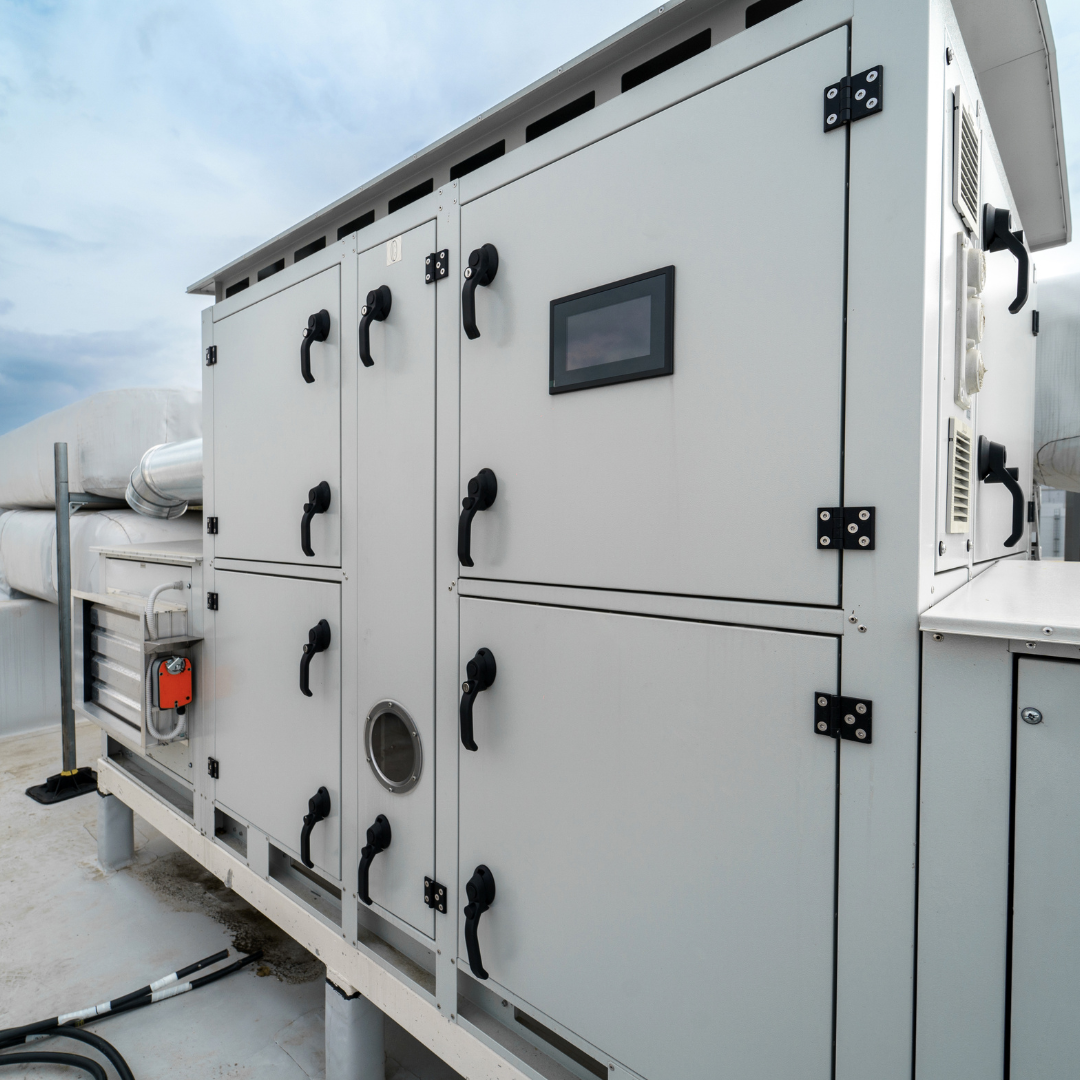
- Air Handling Units (AHUs): VFDs control the supply and return fans, adjusting airflow based on ventilation and temperature needs.
- Pumps: In hydronic systems, VFDs are used on chilled water and hot water pumps to modulate flow according to the heating or cooling load.
- Cooling Tower System: VFDs control the speed of cooling tower fans, optimizing performance based on the cooling demand and ambient weather conditions.
- Exhaust and Ventilation Fans: For applications requiring variable ventilation rates, such as in parking garages or commercial kitchens, VFDs adjust fan speeds to meet demand.
VFD vs. VSD vs. Inverter – Understanding the Differences
- Variable Speed Drive (VSD): A broad category for any device that controls a motor's speed. It includes VFDs as well as DC drives.
- Variable Frequency Drive (VFD): A specific type of VSD that works by changing the frequency of the power supplied to an AC motor.
- Inverter: A component inside a VFD that converts DC power to AC power.
How VFD Improves HVAC System Performance and Lifespan
Beyond energy savings, a variable frequency drive HVAC setup offers several other benefits:
- Extended Equipment Lifespan: VFDs provide a “soft start,” gradually ramping motors up to speed to reduce mechanical shock on belts and bearings.
- Improved Occupant Comfort: By continuously adjusting to the load, VFDs maintain consistent temperatures and humidity levels.
- Quieter Operation: Running fans and pumps at lower speeds naturally results in lower noise levels.
- Enhanced System Control: VFDs integrate with building automation, providing facility managers with valuable diagnostic data for proactive maintenance.
Frequently Asked Questions
What does VFD mean in HVAC?
VFD stands for Variable Frequency Drive. It is an electronic controller that adjusts an electric motor's speed by changing the frequency of the power supplied to it.
Why are VFDs important in HVAC systems?
They allow systems to match output to actual demand, leading to significant energy savings and reduced mechanical stress.
How much energy can a VFD save in HVAC?
Due to the affinity laws, a 20% reduction in motor speed can reduce energy consumption by nearly 50%.
Can a VFD extend HVAC equipment lifespan?
Yes. By providing a soft start, a VFD minimizes wear and tear on motor windings, bearings, and belts.
Conclusion
A VFD in HVAC is a critical technology for any modern, high-performance building. For expert advice on implementing VFD technology in your commercial HVAC system, contact the professionals at Air Master Inc. today to learn more about HVAC variable speed drive solutions.